

Concrete Repair vs. Replacement: Which Is Better for Your Driveway?
Driveways in New Jersey face steady pressure year-round. Daily vehicle use, moisture exposure, and shifting soil gradually affect both the surface and the concrete below. Over time, small cracks, sinking, or uneven areas may appear, signaling deeper structural wear.
When these signs appear, homeowners face two options: repairing the existing slab or replacing it entirely. Hence, understanding the difference between concrete repair and replacement helps clarify which approach gives better value, performance, and long-term durability.
Understanding Your Driveway’s Concrete
A driveway does a lot of work every day, as it needs to handle vehicle weight, stay level, and provide a reliable surface as people come and go. However, all of that depends on how well the concrete holds together as one solid structure.
Because a driveway works as a complete system, problems aren’t always solved the same way. In some cases, the existing concrete can still do its job with targeted improvements, while others require rebuilding the driveway entirely to restore proper support and long-term performance.
Looking at your driveway as more than just a surface makes it easier to know which approach makes sense. It helps homeowners weigh cost, durability, and long-term value before deciding on the next step.
Also read: How Weather and Seasonal Changes Affect Concrete Foundations
How Driveway Damage Develops
Concrete rarely fails all at once, but repeated exposure to freeze-thaw cycles, water infiltration, and soil movement gradually worsens imperfections. How damage forms clarifies whether repair can solve the problem or if replacement is necessary.
Damage occurs for several reasons. Here are the main contributors:
- Freeze-thaw cycles. Repeated expansion and contraction gradually widen small cracks into larger fractures.
- Moisture infiltration. Water seeping under the slab weakens the slab’s base, leading to uneven or sunken areas.
- Heavy vehicle loads. Daily traffic stresses unsupported sections, which worsens cracks and surface wear.
- Poor drainage. Standing water erodes the foundation and speeds up surface damage.
When Concrete Repair Makes Sense
Concrete repair is most effective when damage is limited, and the slab remains mostly stable. Repairs focus on fixing specific areas without disturbing the entire driveway.
Situations Suited for Repair:
- Surface cracks. These shallow cracks don’t compromise structural stability and help prevent water from entering.
- Minor sinking. Small dips can be leveled as long as the underlying soil remains solid.
- Localized wear. Cosmetic or surface issues that don’t impact drainage can be easily corrected.
How Long Repairs Typically Last
The lifespan of a repair depends on the method and damage severity. Surface crack filling typically lasts several years, while structural leveling can extend performance further when soil conditions remain stable. Moreover, regular sealing and maintenance can further improve durability and prolong the driveway’s life.
When Replacement Becomes the Smarter Option
Replacement becomes necessary when damage compromises the overall structural integrity of the slab or base. It also allows contractors to rebuild the driveway from the ground up, addressing grading, reinforcement, and long-term stability.
Signs Concrete Replacement Is Needed
To help homeowners identify when replacement is the best choice, here are some key indicators:
- Spreading cracks. Keep an eye on fractures that continue growing over time, as they indicate a deeper structural issue.
- Multiple uneven sections. The presence of sunken or lifted areas disrupts drainage and usability.
- Drainage problems. Pooling water accelerates erosion and undermines surrounding landscaping.
- Older slabs with repeated repairs. Constant fixes may show that the slab has reached the end of its useful life.
Cost, Value, and Longevity
While initial cost often drives decisions, long-term value is just as vital. Repairs generally cost less upfront, while replacement demands a higher initial investment but reduces future maintenance expenses.
- Repair savings. This works well for localized damage, extending driveway usability at a lower cost.
- Replacement investment. This offers long-term durability, mitigates recurring issues, and allows for decorative upgrades.
Overall, repairs are most cost-effective when damage is minor, while replacement provides better value in the long run for heavily deteriorated driveways.
Appearance and Design Considerations
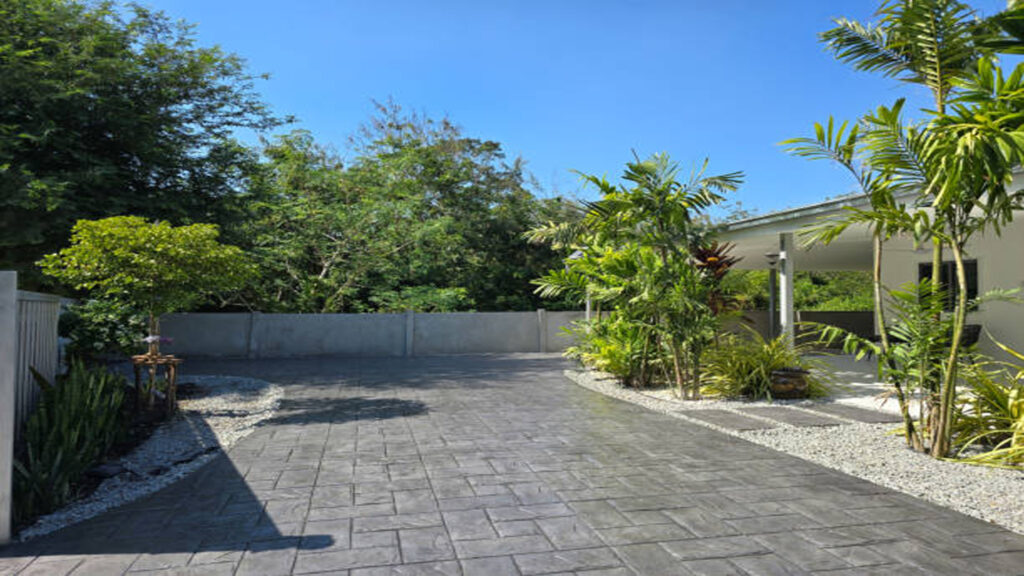
Some homeowners choose replacement over repair primarily for curb appeal rather than damage alone. Replacement also allows driveway adjustments in layout, finish, and overall appearance. To do so, homeowners can consult stamped concrete contractors to combine functionality and visual appeal.
Here are some design-focused options homeowners can take:
- Stamped finishes. This adds texture and pattern to your driveway for a stylish, uniform look that stands out.
- Custom aesthetics. Homeowners can choose desired colors, textures, and patterns that match the home’s exterior for a personalized, cohesive design.
- Durable style. This is a professionally installed decorative concrete that keeps its appearance and strength for years.
Weighing Driveway Repair vs. Replacement Based on New Jersey Weather
Driveways in New Jersey face a mix of extreme seasonal shifts, from snowy winters to hot, humid summers. These conditions influence how concrete responds over time and affect whether repair or replacement is the better option.
- Repair suitability. Fixing works best when climate-related damage is minor, such as small cracks from occasional freeze-thaw cycles or minor surface wear caused by seasonal temperature swings.
- Replacement advantage. This is necessary when repeated freeze-thaw cycles, heavy rainfall, or shifting soil from moisture changes compromise the driveway’s structural integrity, requiring a full rebuild for long-term durability.
Which Option Should You Choose for Your Driveway?
Homeowners facing widespread deterioration often explore options such as concrete driveway replacement near Northern New Jersey or simply repairing to restore performance and reduce future maintenance concerns.
Concrete repair is the better choice when damage is limited, localized, and does not affect the driveway’s structural base. Small cracks, minor settling, or surface wear can often be corrected effectively, extending the driveway’s lifespan without the cost or disruption of a full rebuild. For homeowners seeking a practical, cost-conscious solution, this provides reliable short- to mid-term performance.
Meanwhile, concrete replacement becomes the preferred option when damage is widespread or tied to underlying structural issues. In these cases, replacement offers a long-term solution by addressing grading, reinforcement, and durability, reducing future maintenance concerns, and improving overall performance.
Either way, whether choosing repair or replacement, a professional assessment is crucial to evaluate structural integrity, soil conditions, and climate impacts, ensuring the solution is tailored to the home’s specific needs and provides lasting results.
Take Control of Your Driveway’s Future Today
If you are a homeowner noticing minor or major issues in your driveway, addressing the problem promptly is key to protecting your property. Whether you opt for concrete repair or full replacement, the goal is to maintain a safe, functional, and long-lasting surface that reduces future maintenance costs and preserves your home’s value.
At KRR General Contractor, we provide professional assessments and expert solutions to determine whether concrete repair or full replacement is the best approach, so your driveway remains safe, functional, and long-lasting.
Taking action sooner rather than later can prevent more extensive damage. Seek a professional evaluation now to pick the best path forward before minor damage becomes a larger issue. Contact KRR General Contractor today to get started.